3+ years owning enterprise CMS operations at Okta. Fluent in both developer and stakeholder. The person in the room who makes sure nothing falls through the cracks.
I am a Web Producer with over three years of experience managing the full lifecycle of digital projects across enterprise CMS platforms, including Adobe Experience Manager, Headless Drupal, and WordPress. I have spent my career at the intersection of technical execution and stakeholder communication. The person who translates what developers are saying into something a marketing director can actually act on.
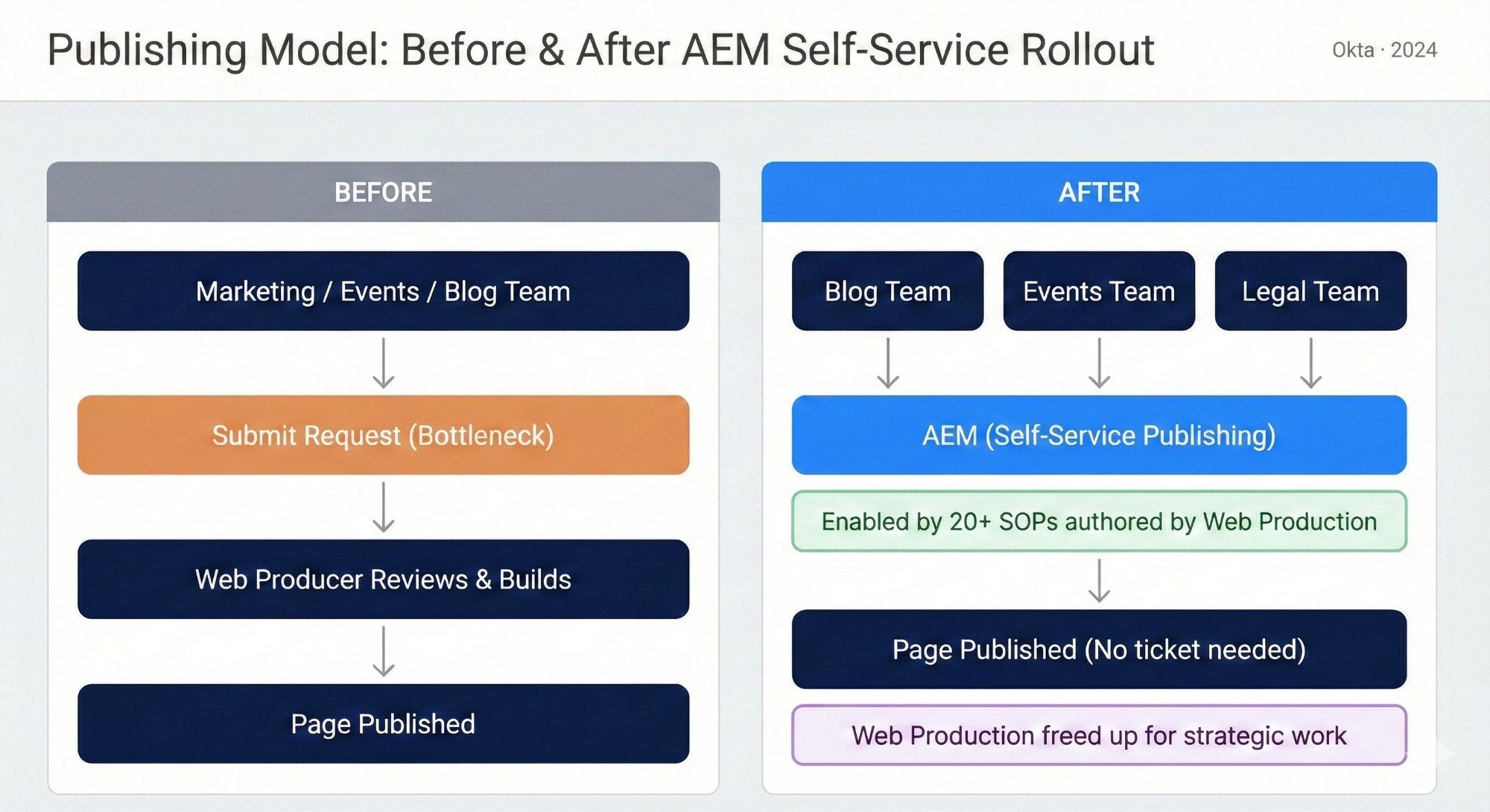
At Okta, I was part of the team that executed a global migration of 500+ web assets from Drupal to AEM, personally rebuilding 60 to 100 pages across multiple languages and regions with zero downtime. I also authored 20+ Standard Operating Procedures and helped train cross-functional teams, enabling a full shift to a self-service publishing model.
Before web production, I spent over a decade in sales, which means building trust quickly, managing expectations under pressure, and communicating with clarity are instincts I bring to every project and every stakeholder conversation.
I am bilingual in English and Spanish, and have hands-on experience coordinating across global regions including AMER, EMEA, and APAC.
Okta migrated its entire website from Headless Drupal to Adobe Experience Manager to enable a self-service publishing model. AEM's folder-based permissions meant individual teams could own their section of the site without routing every change through web production. It was one of the largest infrastructure shifts the team had undertaken, touching hundreds of pages across multiple languages and global regions.
As part of a six-person global production team, I personally handled a significant share of the manual rebuild work. When pages did not migrate cleanly, I would go into Drupal, unpublish the original, navigate to the correct AEM folder in the language masters, create a new page using the right template, source all assets from the Drupal library, and reconstruct the page component by component.
Once rebuilt and QA'd, I pushed each page to all English locales and to every translated folder including ja-jp, fr-fr, es-mx, and ko-kr, then created localization tickets for the translations team. I personally rebuilt approximately 60 to 100 pages across customer stories, product pages, and resource assets.
Migration completed with zero downtime to the live site. Full website moved onto AEM, enabling the self-service publishing model needed to scale web operations without growing the production team headcount.

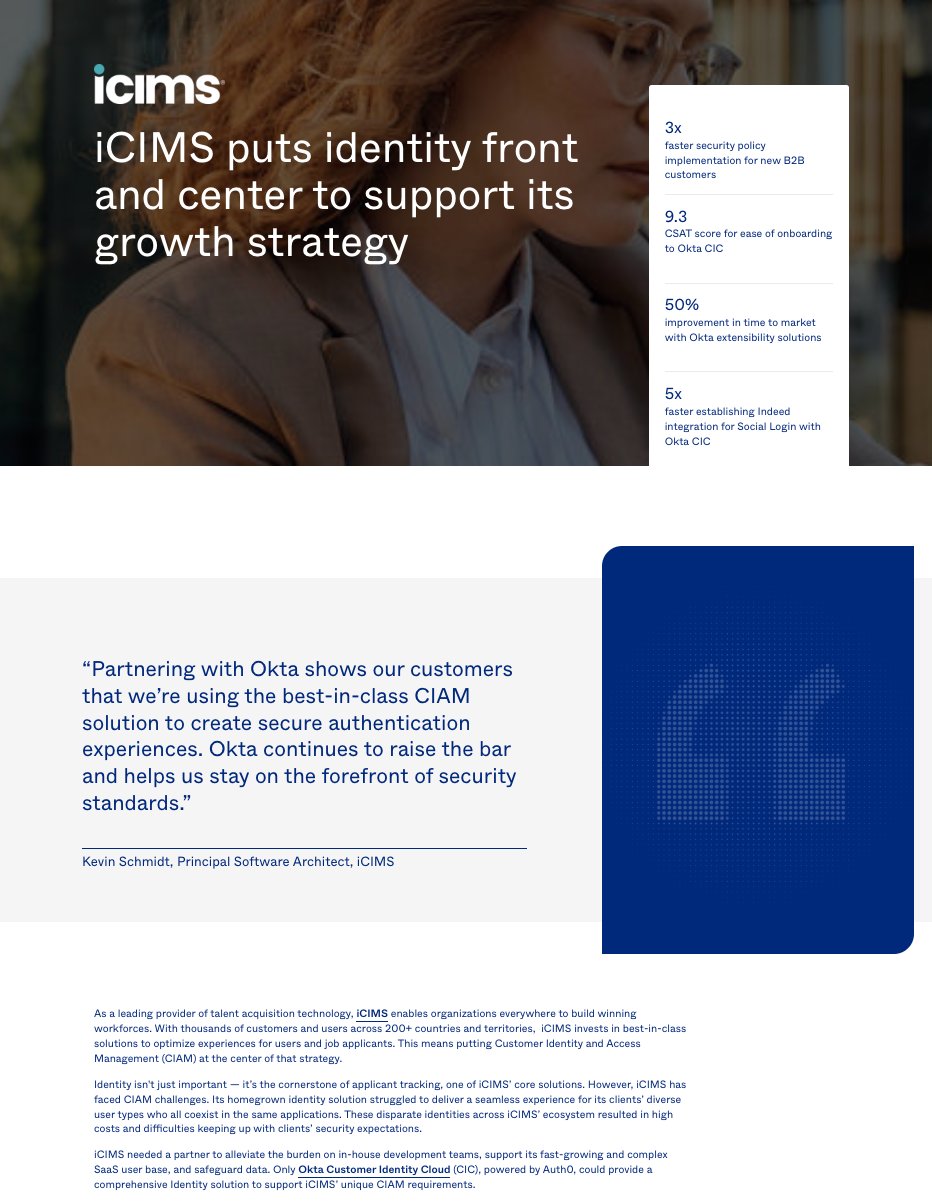
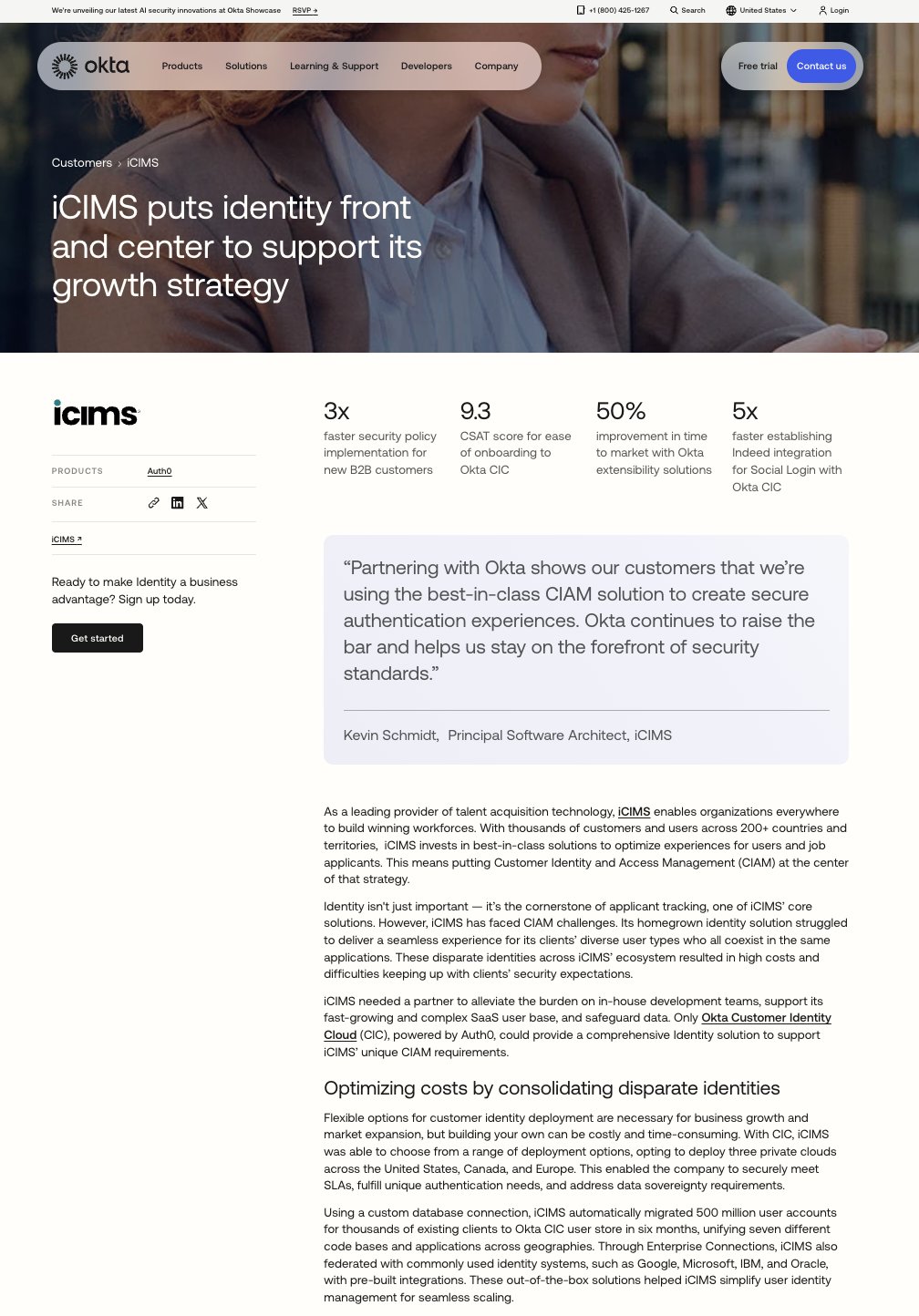
A major goal of the AEM migration was changing how teams interacted with the website entirely. AEM's folder-based permissions meant individual teams could own their section without routing every change through production. The challenge: these teams had never used AEM before and needed to operate confidently from day one.
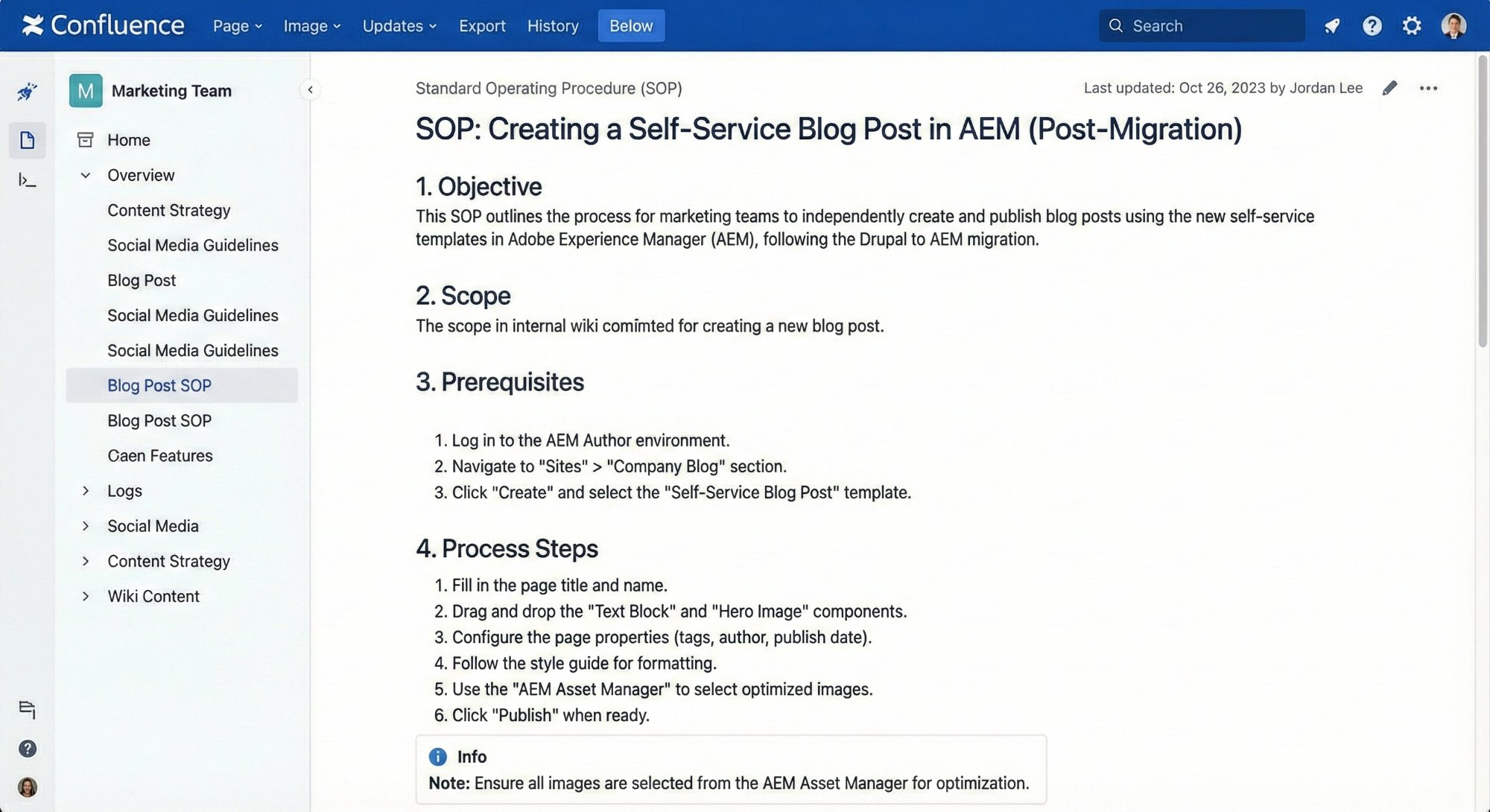
I authored Standard Operating Procedures in Atlassian Confluence covering how to create blog posts, event pages, and press releases, each written for a non-technical audience so anyone could follow them without contacting production.
Beyond documentation, I helped run live training sessions with the Events and Blog teams, walking through the AEM interface step by step and answering questions in real time. The goal was full independence after a single session.
Contributed to a library of 20+ SOPs covering the full range of self-service publishing workflows. Day-to-day content publishing shifted entirely out of the production queue, freeing the team for higher-complexity work.


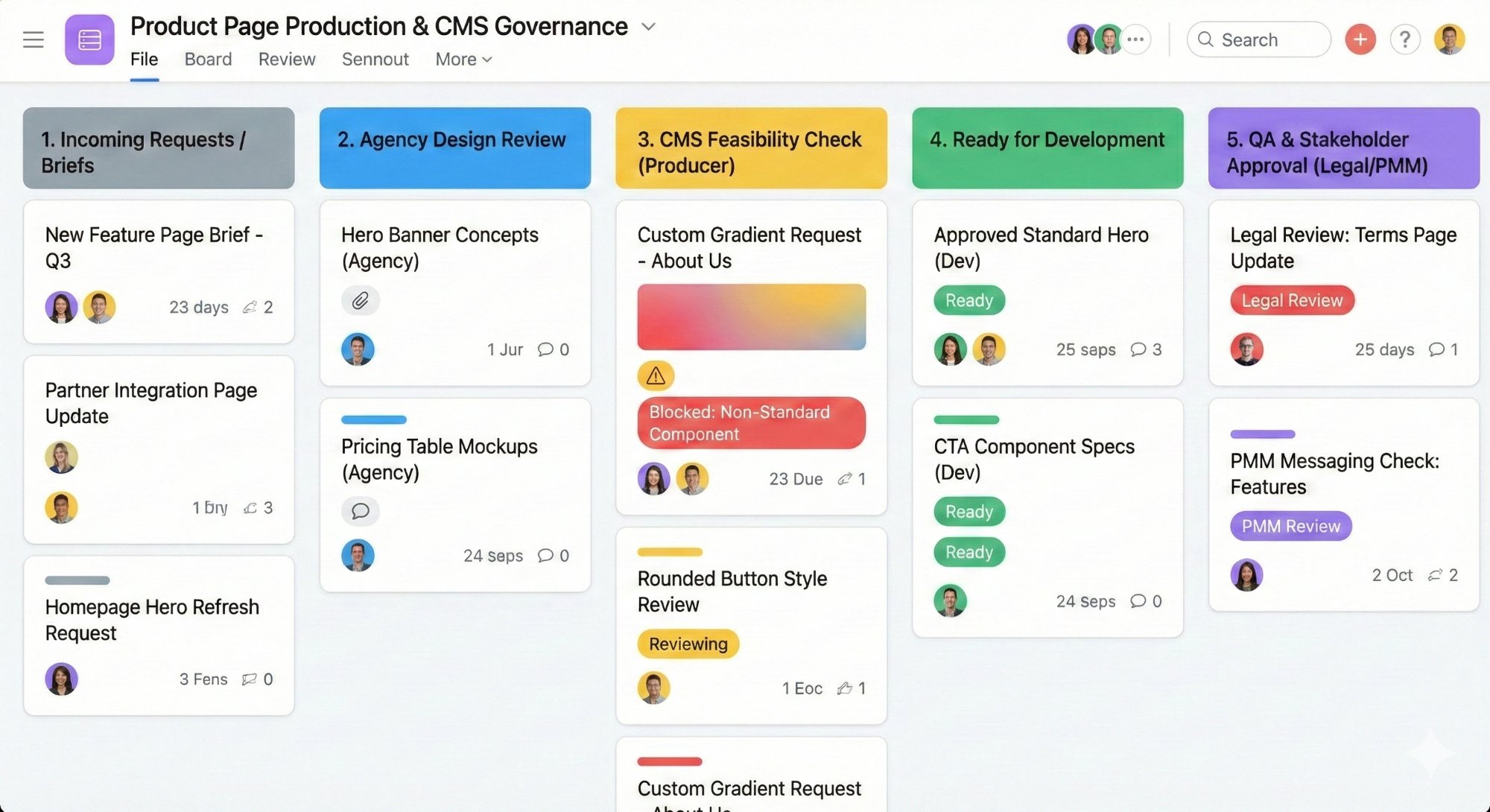
As my role evolved at Okta, I became the production team's representative in cross-functional product page builds, coordinating across designers, front-end developers, product marketing, SEO, and legal. Many designers were from external agencies and were not always current on what the CMS could realistically support.
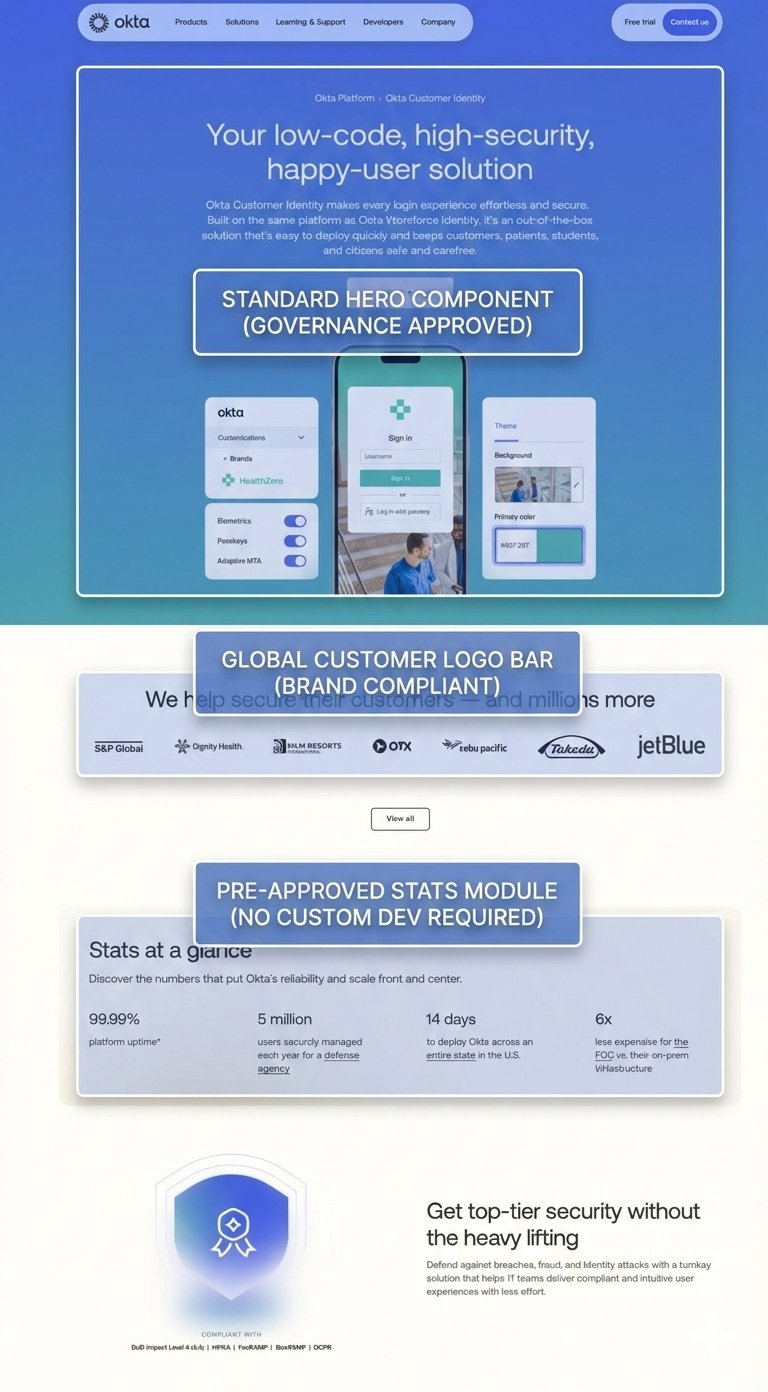
A recurring part of this work was pushing back on design requests that were not feasible within the platform. Requests like rounded corners on components, gradient backgrounds, or non-standard CTA colors seemed minor but had real consequences: added CMS complexity, broken brand governance, and developer time already stretched thin during the migration.
My job was to explain clearly why certain requests were not viable, what the platform could support, and offer alternatives that served the same design intent, all while keeping stakeholders aligned. This meant translating technical constraints into language non-technical partners could understand.
The team avoided scope creep on multiple page builds and kept development resources focused on the migration roadmap. Pages shipped accurately, on brand, and without custom dev work that would have created long-term maintenance issues.


Looking for full-time remote roles in web production, website management, and digital project management. If you think we would be a good fit, reach out.